We're changing what 'in contact' means.
The Messenger module is a plug-and-play hardware device. It integrates with existing standard mechanical and electrical interfaces — no bus redesign, no extended integration program.
Once deployed in orbit, Messenger will autonomously integrate itself within the Extranet mesh network. What makes our system unique is its ability to operate effortlessly, with relaxed constraints on both spacecraft attitude and ground-based coordination operations. Unlike traditional optical systems that require complex, precise pointing, we've solved that challenge.
Optical, not radio
Messenger uses laser-based inter-satellite communication instead of radio, enabling higher bandwidth without RF interference or spectrum licensing. It provides an optical communications infrastructure purpose-built for constellations.
No spectrum license neededAd hoc
Combining a narrow beam and a wide-field receiver that continuously listens across its field of view, Messenger enables ad-hoc connection whenever needed. No pre-planned links or central network management. Designed to operate independently, Messenger minimises mission-planning requirements and impact on payload operations.
Our key differentiatorPlug and play
When designing Messenger, we've used standard mechanical and electrical interfaces for seamless integration with the satellite bus. No platform rebuild is required, allowing the focus to remain on the mission—not the complexities of integrating a communications system.
Standard interfaces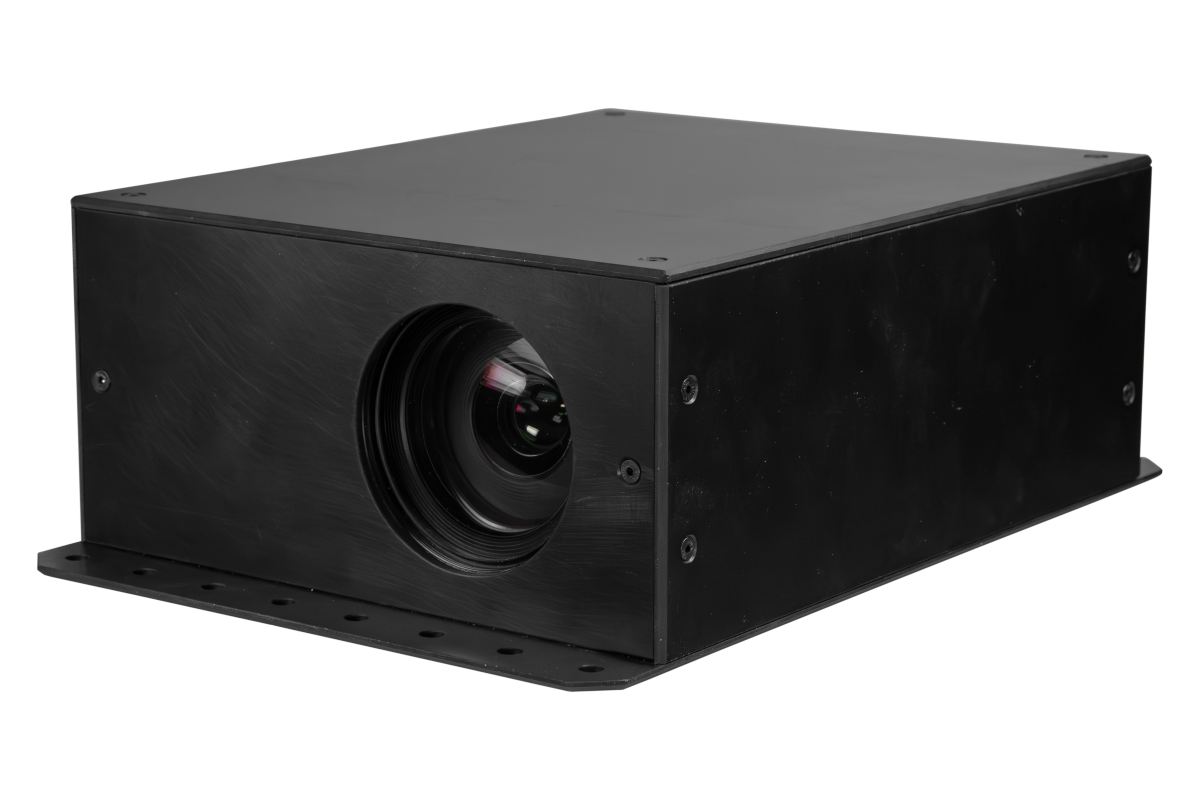
Key Advantages
Messenger module — Preliminary Specifications
Subject to update as development progresses. Launch target: 2028.
| Communication Method | Free-space optical (inter-satellite) |
| Form Factor | 30x30x30 cm - or less |
| Field of View | 120 degrees |
| Range | 5,500 Km |
| Output Power | 10-15W |
| Data Rate | 1-2.5 Gbit |
| Pointing requirement | None · attitude-independent operation |
| Operator Link Planning Requirements | None · Ad hoc communications |
| Target Contact Latency | Less than 60 seconds from ground command |
| Integration Complexity | Plug and play |
| First Flight Target | 2028 |